Big Dreams Start Here: A Convo with Kel Embry & Shannon Little
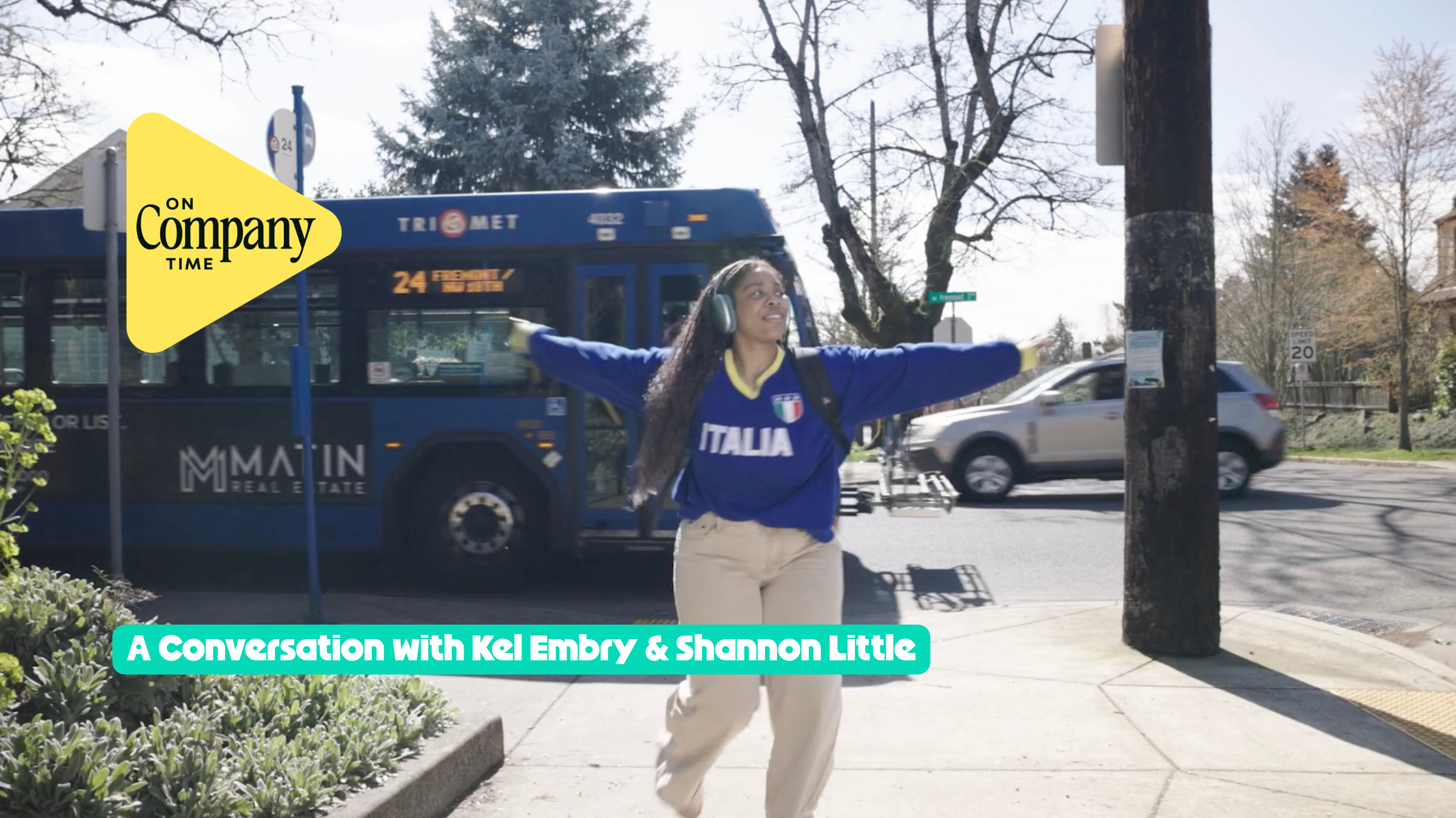
With the closing of the Lloyd Center, Portland has lost its iconic piece of ice. Not one to indulge in pessimism, Lucky Day editor and burgeoning figure skater Kel Embry wanted to do what she could to encourage skaters to get on the ice before it melted away. Kel wrote, directed and edited this piece, assisted along the way by her long time friend, colleague, novice skater and talented producer Shannon Little. We’re so excited to see this work get its flowers!
When editor and director Kel Embry set out to make a series of social spots for Portland's Lloyd Center Ice Rink, the goal was simple: encourage people to get out there, lace up, and give figure skating a try. But when news broke that the rink and mall would be closing, the project took on a whole new meaning.
With producer Shannon Little helping bring the vision to life, the team pulled together four locations, a full cast of local skaters, and one very ambitious shoot day. The result was a love letter to a beloved Portland institution and the community that called it home.
The spots recently took home two Davey Awards, recognizing the work of independent creators and smaller creative teams. We sat down with Kel and Shannon to talk about the inspiration behind the project, the magic (and occasional chaos) of making it all happen, and what the recognition means to them.
On Making the Spots
Why did you want to make these films in the first place?
Kel: I originally wanted to make them before we ever got the news about Lloyd Center potentially closing. It was an idea I had when I first started skating. When you start skating, you're doing it because you have this idea of what you're capable of achieving one day. That was the concept behind featuring three different kinds of skaters: someone in their prime competitive years, a young kid just getting started, and an adult beginner.
It was important to tell that last story, too. It's never too late to chase that version of yourself. We cast my coach, Dani, as the adult beginner.
Then, in February, we got the news about the mall's intent to close, and I texted Shannon: "Hey, we have to do this now." (There was also a little hope that maybe we could get enough attention from these spots that the developers would see the value of the rink and want to save it. Which they did not…)
Shannon: I've known Kel since 2015 or 2016. We went to college together, and throughout all those years, we've had the opportunity to work together in different capacities. I've produced for Kel, directed projects where she's been my editor, but I'd never had Kel as the director. When she first told me the idea, I thought, one, this is incredibly important to her, and I'd love to be part of it. But two, I was so excited to see her direct again. It was an immediate, "Let's do this now."
Kel: I love you.
Shannon: I love you, too.
Shannon, what was the hardest part of the production process?
Shannon: Honestly, it was really seamless. I think the biggest challenge was fitting everything into one day. We had four different locations and three company moves, one of which was at the Lucky Day office, where we rebuilt an office set and then had to flip everything back before heading to the ice rink.
We shot four locations in about eight hours, which is nuts. We also had very limited ice time. I think we only had about three hours on the ice?
Kel: We had an hour and a half on the ice. It was so little time!
Kyle: I wouldn't have guessed that. It looks like you had two days.
Shannon: Exactly. Movie magic.
Kel, what was the hardest part for you?
Kel: I think it was the same challenge: just how much we had to pack into one day. If we set up a shot and it didn't turn out the way we wanted, we didn't have a lot of time to pivot and try something else.
The park was probably our most challenging location because it was a public space, and we were trying to be mindful of not getting other kids in the shots or disrupting families enjoying their day.
We also had a bit of a fiasco with a black curtain at the rink. We asked the staff to help us set it up, only to realize it wasn't going to be big enough. The sweet rink staff put it up for us, we set up the light, and then we had to ask them to tear it all back down!
But if those are the only two things that went wrong all day, I'm really happy with how it went. We also got a bunch of extra footage that I can save for the day we open a new rink in Portland.
Kyle: Let the cameras roll, baby.
Kel: I guess the other challenge was remembering to say "cut." I'd just be like, "Yeah, that looks great." And then Dillon would be like, "Okay, so cut?" And I'd be like, "Yes, that."
On Directing & Collaboration
Kel, as both director and editor, what was the most important lesson you learned from this project?
Kel: We were really lucky to work with Dillon Vibes as our cinematographer. He was great about taking the initiative to explain what different lenses would do in a particular context and laying out our options. That was really helpful, especially since I hadn't directed anything in seven years.
Shannon also pushed me to prep more than I probably would have on my own. I wouldn't have created as detailed of a shot list without her encouragement, and I'm glad I did. It really limited the number of conversations we needed to have about how we wanted to technically approach each shot.
I'm grateful to have worked with Dillon, especially in those moments when we needed to make adjustments. He brought such a great level of expertise and had the personality to make those conversations easy.
Going forward, it makes me want to learn more about lenses and cameras. I live so much in the post-production space that I'm not necessarily a gearhead, but I'd like to be able to take more initiative and stay ahead of those technical questions.
And as an editor, I have to pat myself on the back a little. You know when you're editing and think, "We should have held on that for 10 seconds longer," or, "We should have gotten just one more take"? Being in the moment as a director gave me an advantage because I knew what I could use as we were shooting. I was always saying, "Team, that was the one!" And then we'd do one more for safety.
Shannon, what's something you learned from the experience?
Shannon: I think it's important to make things you believe in and things that are important to you.
When we were talking about the rink closing, I wasn't entirely sure where these spots would fit or what they would mean to the community we were making them for. But as the process went along, between the actors, the real skaters, the rink staff, Kel, and the skating team, it became something really special.
People from the community actually came to the rink while we were filming to watch and cheer us on, which was crazy. I've never had that happen before!
It was a really good reminder to make things about causes you care about. It makes the whole process so much more fun and worthwhile. And as Kel mentioned, there's a life for these spots beyond the rink. Even though Lloyd Center closed, there's going to be something in the future, and these films can be used for that.
I don't think I fully understood that while we were making them, but looking back, it was like a little love letter.
What's the most advanced skating trick you can currently perform?
Kel: A loop jump. It's very hard, so I often skip it. But I technically can do it! I'm just not as consistent with it.
And Shannon, where do you land on the skating stunts?
Shannon: I learned about them while we were on set! I was obsessed with the movie Ice Princess growing up, and I really thought I could have a career in figure skating. Then I couldn't stop.
Kel: When you skated in Minnesota, did you play hockey or figure skate?
Shannon: Growing up, it depended on the year. When I was three, I was gifted red figure skates for Christmas from Santa, and it was the coolest thing ever. I still have them at my mom's house.
On the Davey Awards
Where did you hear about the Davey Awards, and what prompted you to apply?
Kel: It was literally a targeted ad!
Shannon: Seriously?
Kel: Yes! It was an award for small shops and independent creators, and I thought, "Okay, well, that's us." It's put on by the Academy of Interactive and Visual Arts, and I figured, why not apply?
I didn't really know what a Davey Award was, but this was the 22nd annual competition, so it's been around for a while. I was curious about their criteria for what counts as small and independent because there were some pretty big names that had applied.
I also looked up the origin of the name. I assumed it was named after some guy named Davey who started the awards, but it's actually a reference to the David and Goliath story. The idea is to recognize smaller shops and independent creators going up against gigantic production companies and big agencies.
Looking Back
Anything else you'd like to share about the project?
Kel: On the day we filmed, Alice had recently landed her axel. But what happens with an axel, and with most skating skills, is that you get it, and then it disappears for weeks, months, or sometimes years.
We were filming in the park first, and I was explaining the concept of a match cut to her. I asked what jump she wanted to do, and she said she'd like to do an axel, but she couldn't always land it on the ice. She could do an off-ice axel, though, so I told her we could film that and use a little movie magic to make it work.
That helped boost her confidence, but even her mom came over at one point to let us know that Alice wasn't consistent with the jump on the ice yet.
I didn't really realize it at the time, but Alice's anxiety about not being able to reproduce something she knew she could do was exactly the anxiety I'd been feeling about directing for so long.
I had been working on a project in 2019 that was in pre-production when COVID happened, and the opportunity to tell that story eventually passed. After that, I stepped away from directing for a long time. I knew I could direct, but I hadn't done it in so long that I started wondering, "What if the skill is gone?"
When we first shared the spots with the figure skating community, the local community, and the Oregon Skating Council, we received so much support. But getting recognition from experts in the industry was a kind of validation I needed. It proved to me that I still had that skill. That was really nice and gratifying.
I'm also incredibly thankful for the whole team. Everyone was so positive throughout the process that I never felt like I had to do anything. It was like I was in a self-driving car. Everyone was just doing such an amazing job.
Kyle: That's awesome. More projects on the horizon!
Watch all three spots here!