Fresh Cut: Jeredon O’Conner
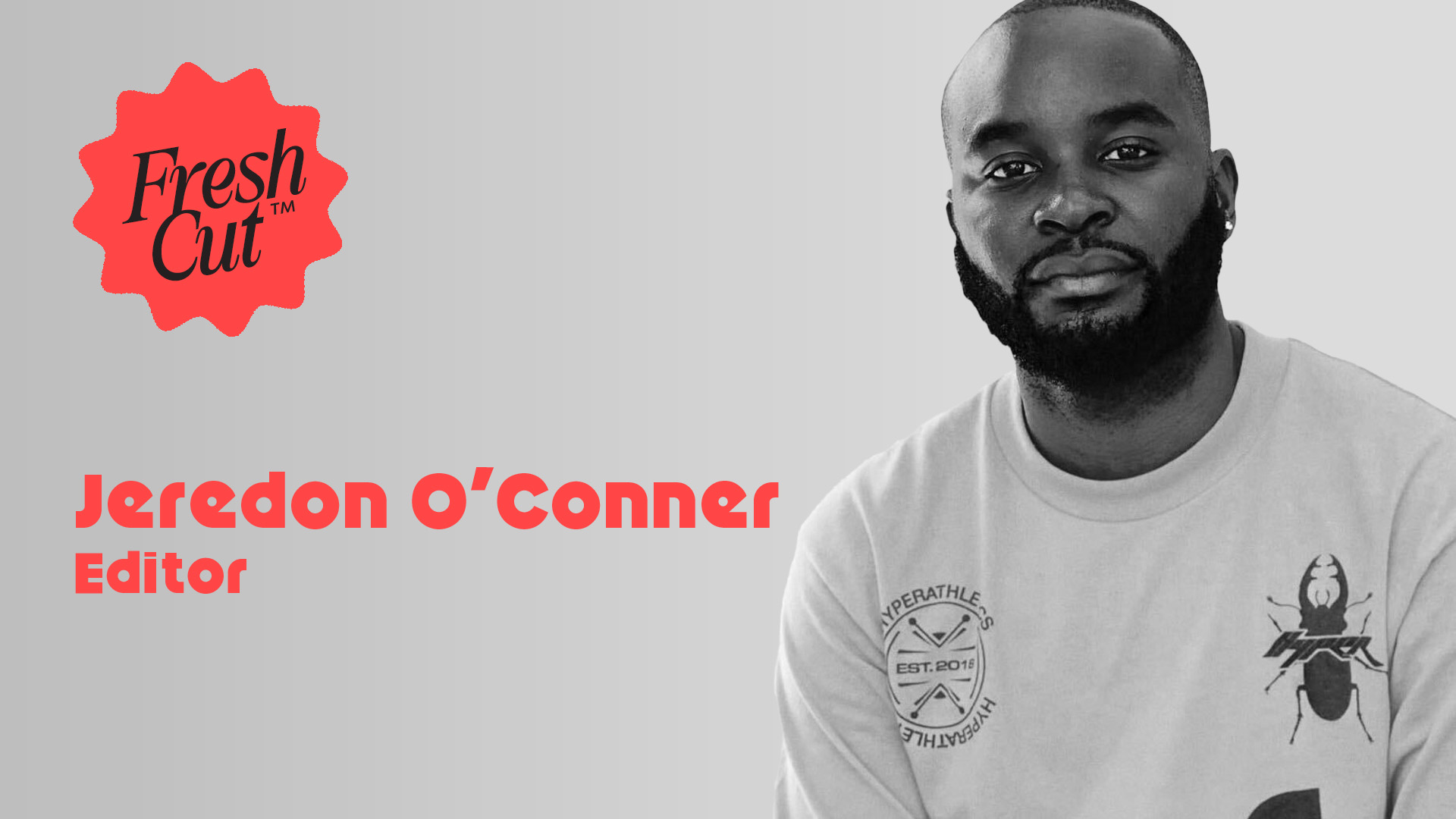
We’re very excited to announce that Jeredon O’Conner is joining the Lucky Day roster. A multi-hyphenate talent, Jeredon has experience across all parts of the creative process - creative concepting, script writing, directing, cinematography, and edit - and he brings that wealth of experience to bear in the edit room.
With a not so secret passion for his family and interstellar space. When he’s not in the edit room you can find Jeredon cycling the back roads and parks around his home in East LA. We’re thrilled to have Jeredon on the team. Get to know Jeredon in our interview below and have a look at a selection of his work here.
What's something you're always hoping people will bring up in conversation?
Jeredon: Anything sports-related, when the World Cup was going on, I watched every game. But honestly, anytime somebody brings up kids, like "oh, I've got a two-year-old," I'm right there with them. Outside of sports, that's my other constant. I'll pull out my phone and be like, "look at my screensaver." I'm already that dad, and I'll probably be that dad forever.
What's a positive trait people always compliment you on?
Jeredon: I'm always smiling, always laughing. People bring that up a lot. The other one, my friends in Portland call me the mayor of Portland. I'm social, I can talk to anybody about anything.
What's one song that makes you feel understood?
Jeredon: Before any big editing day, I've got sessions all day, and I put on "Hustler Musik" by Lil Wayne. That's my song, it's my go-to, for sure.
What's something you think is wildly underrated?
Jeredon: Useless facts. My wife gives me shit about it. I'll go down a YouTube hole with Neil deGrasse Tyson and random space facts. But those things always come up later. Random trivia is underrated because it gives you something to talk to anybody about.
How do you exit a party?
Jeredon: The same way I enter it, I speak to everybody. When I get there, I make my way around, say hi, hug people I know. When I leave, I do the same thing in reverse, starting with the host. I genuinely can't leave a room without saying bye to everyone. I'm a people person to the max.
🎞️ On Editing 🎞️
For people who might not know, what does an editor do?
Jeredon: I always describe it as the second writing phase. There's the writing before production, the screenwriting and copywriting for commercials. Then you shoot the project. Editing is where you rewrite the story based on the footage, instead of in Final Draft you're doing it in Premiere. Shots might change, scale might change, things might get cut but you're still writing the story, with footage, sound and the script. You're helping tell the story that was already planned two phases earlier, but updated with what you actually captured with the camera.
What's an editing hill you'll die on?
Jeredon: Once you're picture-locked, don't unlock the project. It's okay to say you're not ready to lock yet, write and rewrite all week if you need to. But once you lock it and move to online, leave it locked. At some point you have to be pencils down.
What's your approach to making sure a client's creative vision carries through to the end of the project?
Jeredon: I love talking to the creatives, that relationship between editor and client or agency really matters. I'll make as many suggestions as I can based on their vision, but I always check in, especially on any big editorial change. In commercials, the client or agency's art director has the final say, but you can offer plenty of creative input along the way. I think that's when I look towards editors for, you know, we're not just like robots who plug and play things and like, paint by numbers. They want to see how we can amplify their vision.
What makes a good collaboration between a producer and an editor?
Jeredon: On a high level I would say producers who have their editor's back. We always appreciate that. When notes come in piecemeal and all over the place, a good producer reins it in and checks in with the post team instead of just piling on hours. That consideration is a big thing. We could be in the trenches together for weeks, ten hours a day or more, so just being a good person is a huge asset. The best collaborations happen when everyone's getting along and having fun together, not being stone cold about it.
What's the most important lesson you've learned working in a remote environment?
Jeredon: When you’re working from home it's easy to forget to take breaks. Because you're already comfortable. I'm literally on a call right now with a quilt on my legs, I have slippers on. Without a commute, you just keep your head down and end up going later than you should. One of the biggest things I've learned is to build in breaks, go for a walk, home is not work.
How did you get into post-production? How do you start becoming an editor?
Jeredon: I've wanted to be a filmmaker since I was eight. My mom had a huge DVD collection of real movies, not just kids' stuff, and Saving Private Ryan was in there, and I watched it as an eight-year-old and thought it was the coolest thing. Then I watched the behind-the-scenes, where Spielberg talked about growing up making little war movies with his friends, going to the junkyard and digging trenches, using a board to kick up dust for explosions. Seeing the technique behind it hooked me. I started doing the same thing with my toys, editing in-camera.
On the editing side specifically, my dad's a musician and had a home studio with Pro Tools and keyboards. He'd have me help edit his songs, punch-ins, trimming sections…He taught me editing on an audio waveform level before I even realized that's what I was doing. Later I did a filmmaking summer camp in Memphis where we cut PSAs. It was really cool, the class was for high schoolers and I was this elementary school kid in this program. I just loved it. I also was a part of the production team at a radio station editing their bumpers, using what my dad had taught me. I was this ten-year-old kid working alongside adults in their 30s and 40s. That was my first real experience in post-production, and I've loved it ever since.
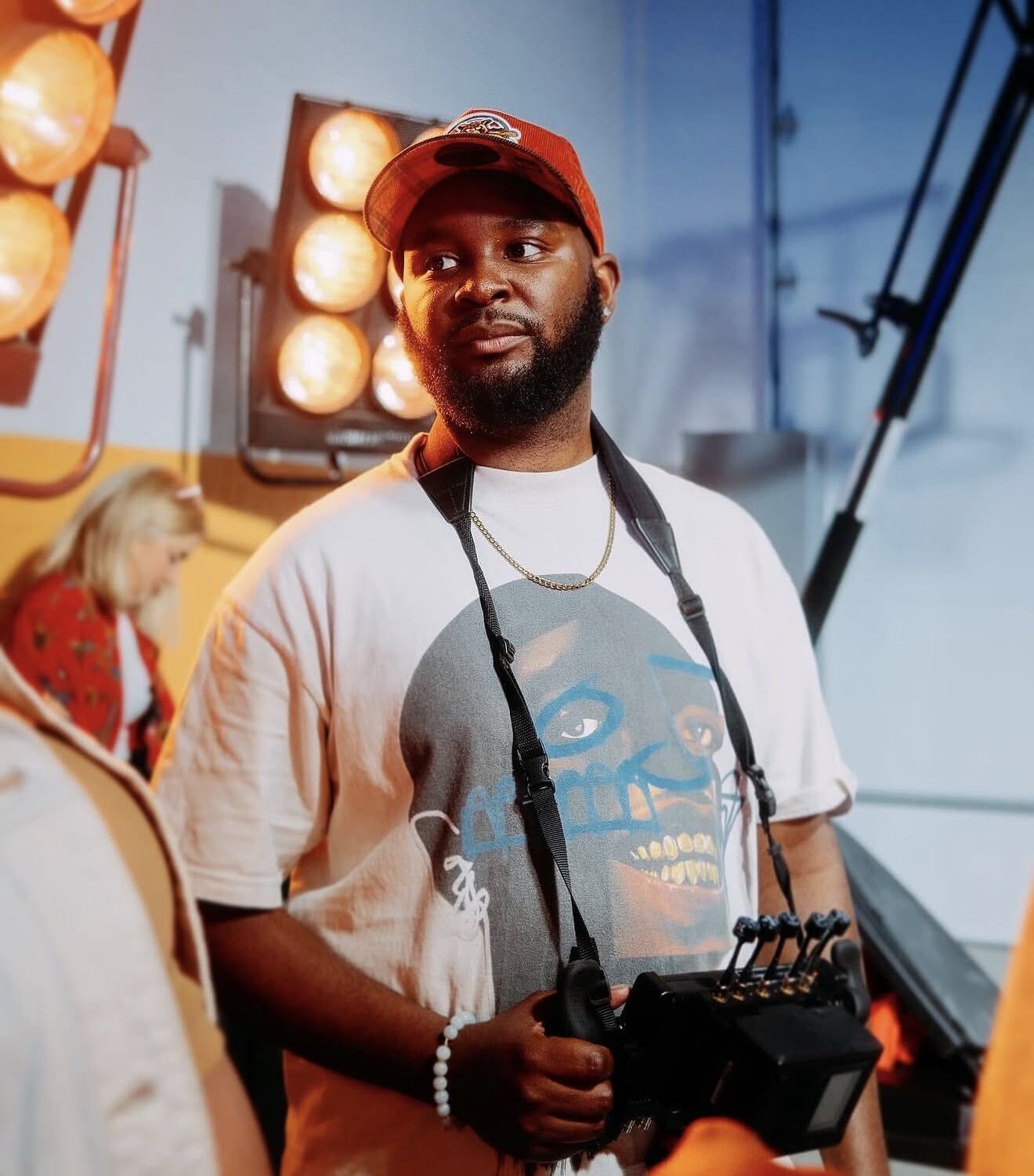
You've done production and post, which gives you more satisfaction?
Jeredon: Editing, because that's where you see everything you built pay off. You know, or not, but most times. All the choices from pre-production and production start coming together and making sense. Even something like "oh, that location worked well," you see it click as you build the story in the edit. That satisfaction carries through into color and mix, when everything finally comes together.
If you weren't in post-production, what weirdly specific job would you be doing instead?
Jeredon: I would be an Art curator. When I lived in DC, I fell in love with the free museums and the art scene. They have some of the best art in the world and it’s all for free! I'd also studied abroad in Rome and learned how to paint frescoes. I'm not a great artist myself, but I really appreciate art. My first year in Portland I started something called the Culture Series, an art show celebrating people of different races, colors, and creeds making artwork about their heritage and culture, funded out of my own freelance checks. Then some folks at Wieden + Kennedy came and saw it and offered to fund the next three shows. I did four iterations over three years, working directly with a lot of artists, curating rather than creating. Two weeks after I left W+K I did a show called "Primary,” and it was art from artists of color making work based on primary colors, whatever that meant to them. You know, they'd be about your culture. They just had to stay in the lines of like, you know, red, blue, yellow. It was cool, it was really cool. I'd absolutely be an art curator in another life.
How do you approach creative feedback?
Jeredon: I say that the first pass is always the Editors Pass. After the first pass, everyone is going to start making notes based on the first pass. So whatever experiment you want to do, whatever cool shot you want to try doing, do it first pass. You’re not going to come back on v15 and say “Oh, what about if we try this?” The first pass is yours, from there we scale down. From there I address the feedback directly first, then note my own suggestions. Once we're in a live edit session, I'll bring up my suggestions, "I know we did this, but I think it's cooler if we did X, Y, Z." I work through notes on Frame one at a time, checking them off as I go, or striking them through if there's no checkbox.
What's the best creative note you've ever received?
Jeredon: Make the logo bigger 😉. No. I'm kidding. I don't know. About ten years ago, when I started doing narrative work, someone told me: you don't have to see everybody say all their lines. I'd been cutting dialogue like ping-pong, back and forth. Learning to pre-lap and overlap, cutting to a reaction while someone's still talking, you want to see how they react and feel about it. For documentary work, the note was simpler: "make it see-say." If someone's talking about how the spokes on a bike work, show the spokes.
Name a film or commercial you wish you had edited.
Jeredon: I think about this all the time, there is the Spike Jonze Apple spot with FKA twigs, where the world opens up. It's the coolest commercial I've probably ever seen. It doesn't feel like a commercial at all. I watched the behind-the-scenes on the color work, how saturation shifts from the beginning of the spot to the end. That's one I wish I did everything on, I wish I had directed it, I wish I edited it. You know, it’s perfect.
When you're not working, how do you like to recharge?
Jeredon: Bikes, I'm not working and I’ve got being a family man covered, then I would definitely like bikes. That's my time, it's just me on the bike; you're working out, but you're zoning out at the same time, and you get a little bit of nature too.
What's something you nerd out about outside of work that surprises people?
Jeredon: I love space. My wife didn't even know we were dating for so long, and something that happened, I was like, “yeah, I love space.” She said, “I've never heard you talk about space.” But I have space tattoos. I have an astronaut tattoo, my YouTube is constantly full of Neil deGrasse Tyson and space facts. But most people have no idea I'm secretly the nerdiest space guy around.
What's a small, everyday thing that makes you feel grounded?
Jeredon: It's not small, but my family, you know the literal tinyness of a two year old is so small. It will humble you, but he'll give you the reason…you know to motivate. My two year old and my wife. She's a producer and we work together so that makes me feel very grounded, spending so much time with them. Co-parenting and doing something as simple as playing catch with my son in the morning. Yeah. My family definitely.
On Lucky Day 🍀🌞
What do you think makes Lucky Day a good partner for clients?
Jeredon: It comes back to what Chris always says, we're a people-first company. Clients feel that. It doesn't feel like we have the traditional vendor relationship where everyone's more stressed and guarded. We joke around, we welcome clients in, it feels like one team working toward the same goal instead of two separate entities. I've worked at post houses where it felt very different. Being a remote company also means we get talent from all over the country instead of being limited to one or two cities which allows us to have all the best people come together to make something great.
Who on the team would make the best director?
Jeredon: Chris will make a great director. The first time I met him was on a call where the team was going through some rough patches on a project, and the way he reassured everyone and broke it down was just great leadership, he probably doesn't even remember it, but it stuck with me. He'd be great leading people across departments. For something more purely creative and fun, I'd say Molly she’s so fun and her energy is infectious, the kind of person who says "we're doing this thing, guys" and everyone's immediately in.
If you could swap jobs with someone else on the team for a week, who would it be and why? Jeredon: Honestly, I have no idea how Spencer or Nick Thomas in finishing do what they do on the Mirror Mirror side, it's a black box to me. I understand the offline process at a basic level, but not how they move as fast as they do. I'll come to them thinking we need to remove a logo and I'm bracing to edit around it, and they're like, "it's nothing, no problem, ” I love that!
🔥RAPID FIRE 🔥
What's your favorite TV show? The Wire.
What's your favorite movie? Saving Private Ryan — because of how it got me started.
What's your favorite book? Harry Potter and the Goblet of Fire. Best book, not necessarily the best movie.
What's your favorite food? Pancakes. Everybody's happy eating pancakes.
What's your favorite restaurant? Waffle House, and Cracker Barrel for pancakes specifically — whenever I go home, Cracker Barrel is a must.
Favorite color? Green.
Favorite music? Hip hop and R&B — Kendrick and Jay-Z are my A1s.
What's your favorite place on earth? Wherever my wife and son are.
Who are three people you'd want to have dinner with, dead or alive? Marvin Gaye, Amy Winehouse, and President Obama. Yeah, that's a great dinner.
See Jeredon's Work Here
